Walk of the Wind
Lac-Mégantic, CA
Chouette à voir!, St-Jude, CA
An immersive forest path reveals a secret symphony of birds, inviting new interspecies connections through active listening.
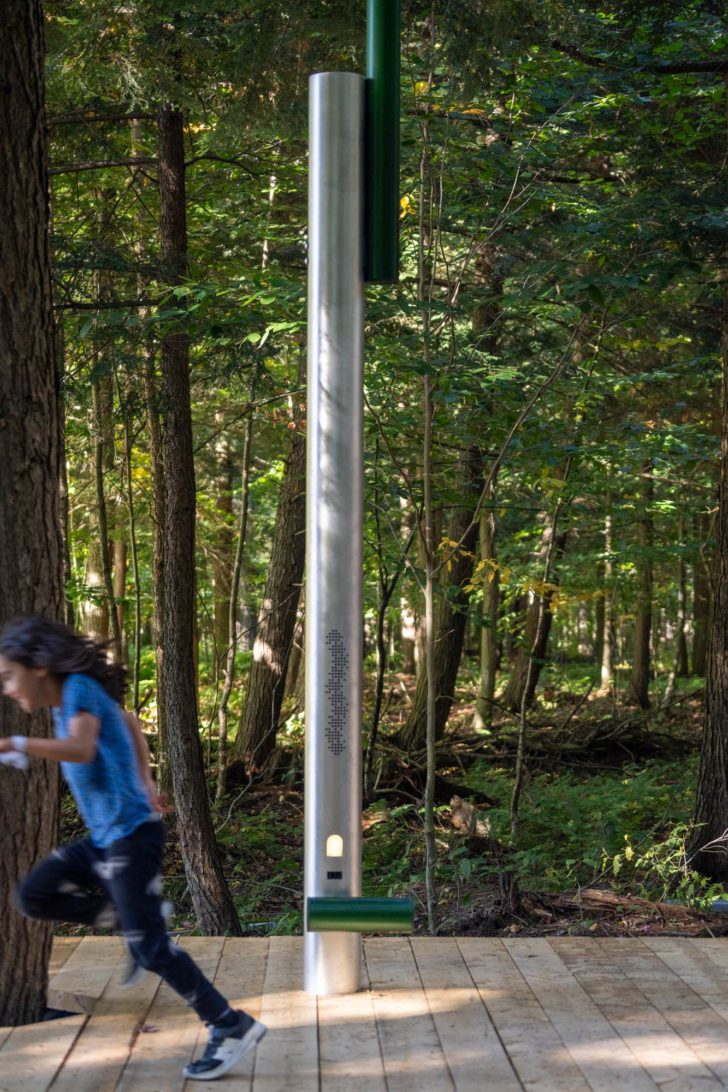
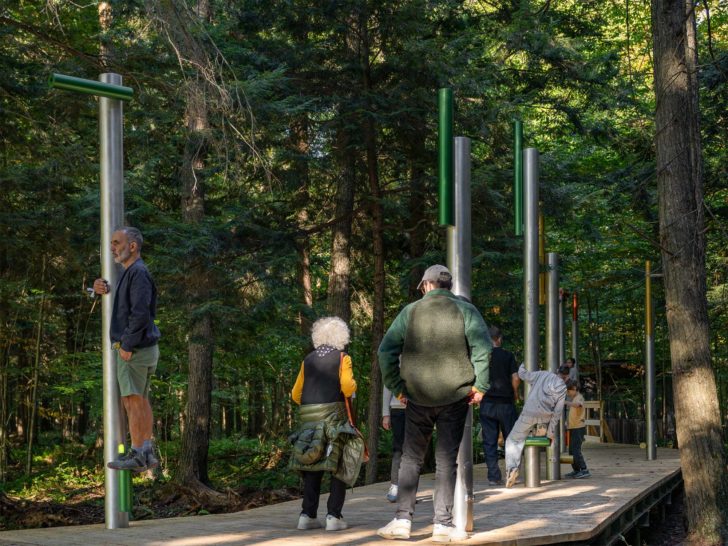
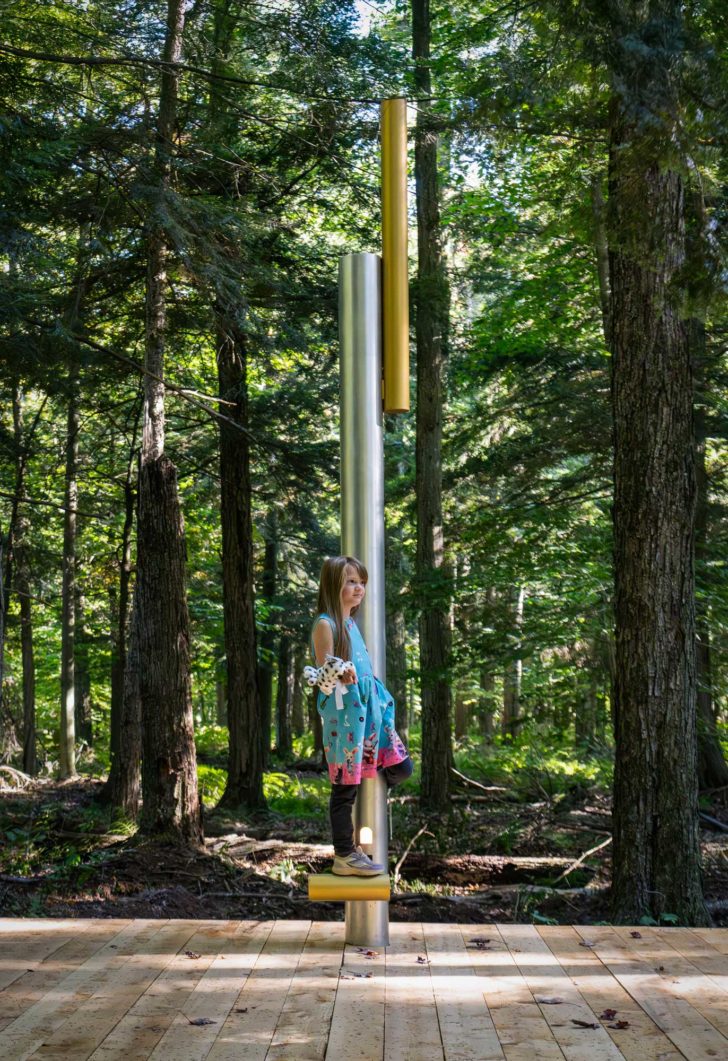
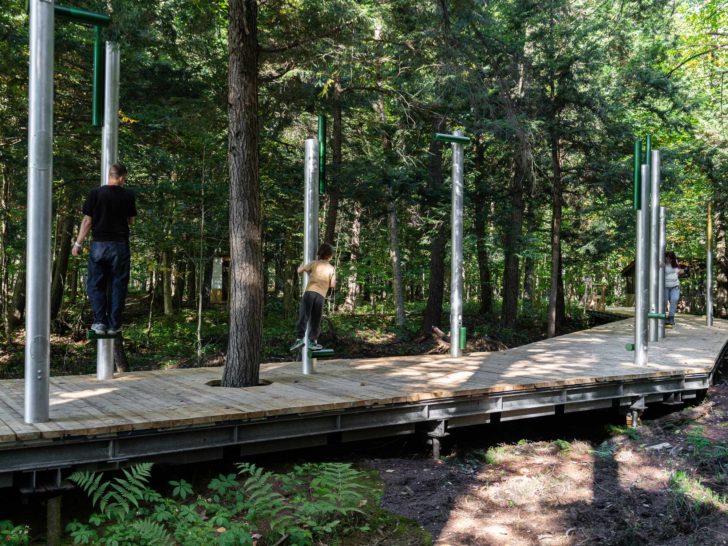
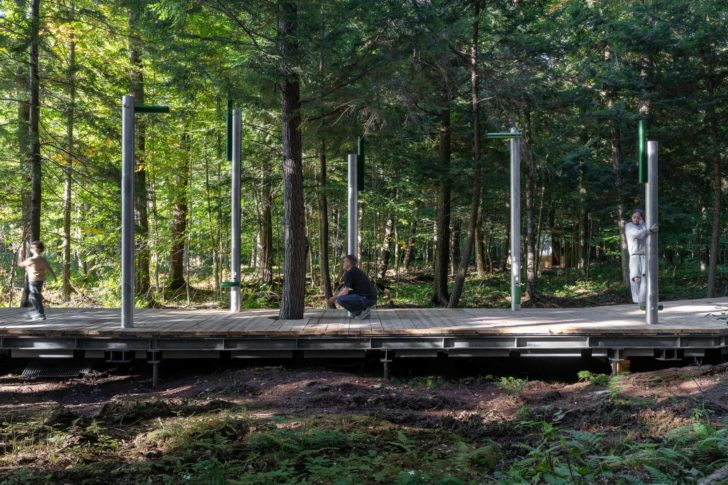
Punctuating the forest boardwalk of a sanctuary for birds of prey, ten interactive human-sized perches compose a sonic narrative of the forest’s inhabitants, inviting visitors to tune into the natural surroundings.
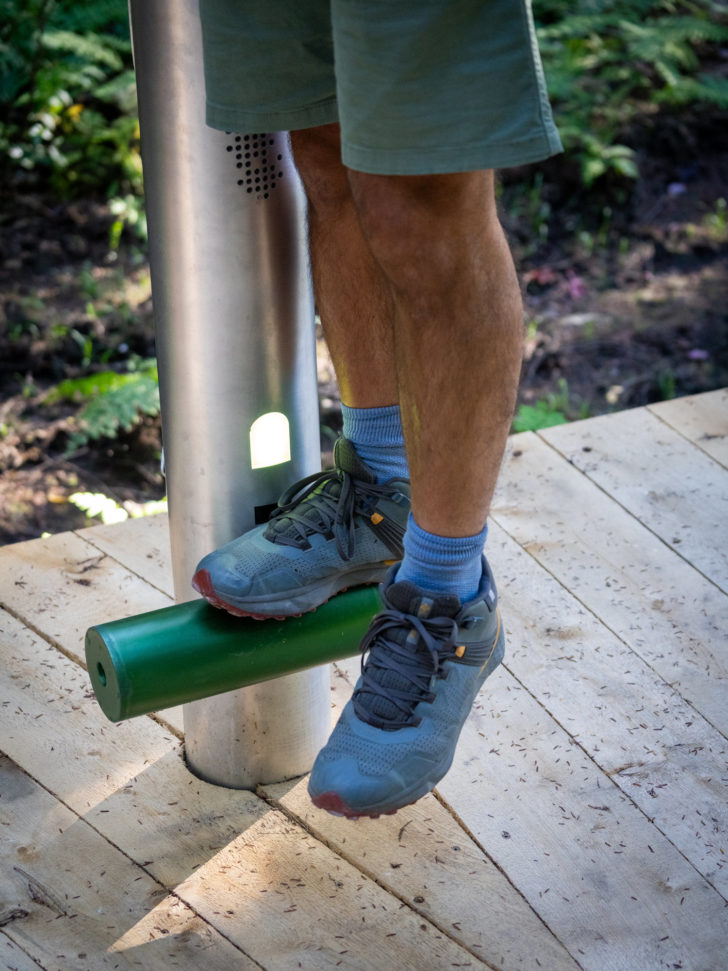
The winged residents of the sanctuary are quietest when humans are present; the Human Perches reveal what we otherwise cannot hear. Perching calls for a full awareness of one’s body and physical surroundings. In this moment of presence and suspension, a new form of active listening is engaged.
Created in collaboration with internationally acclaimed Canadian contemporary classical composer Keiko Devaux, the pathway’s layered and evolving soundscape reveals the dynamics and interactions that animate the surrounding ecosystem. When a visitor stands upon a perch, the call of a local bird is delicately added to its unique seasonal composition.
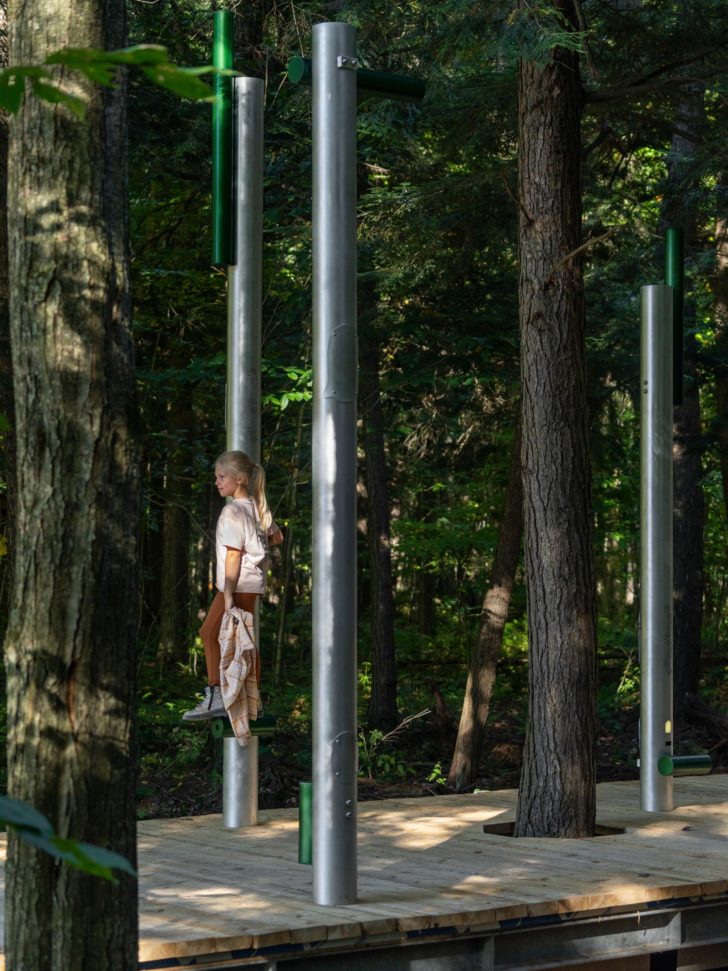
The interactive soundtrack blends into the surrounding landscape and sharpens the senses. Once the experience is complete and the perches go silent again, visitors have remarked on being able to hear new layers of natural sounds from the forest. Having settled into active listening, distant calls, rustling leaves, and sounds of the forest floor suddenly rise to the surface, more vivid and present than before.
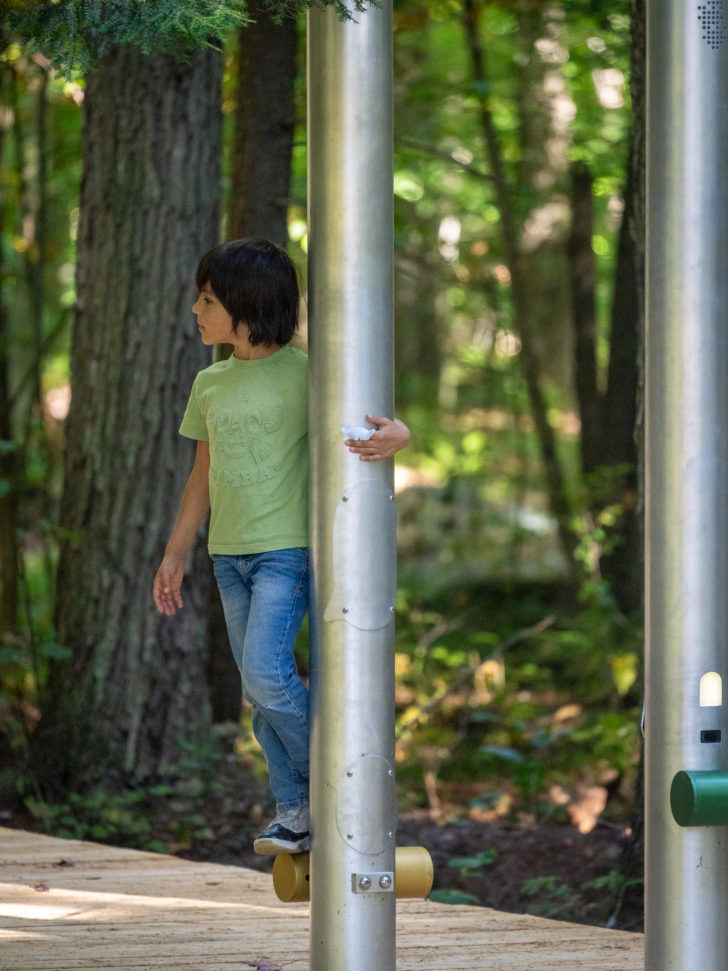
When no humans are present, the artwork is silent.
When humans are present, each perch plays part of an abstract soundtrack drawn from the surrounding ecosystem.
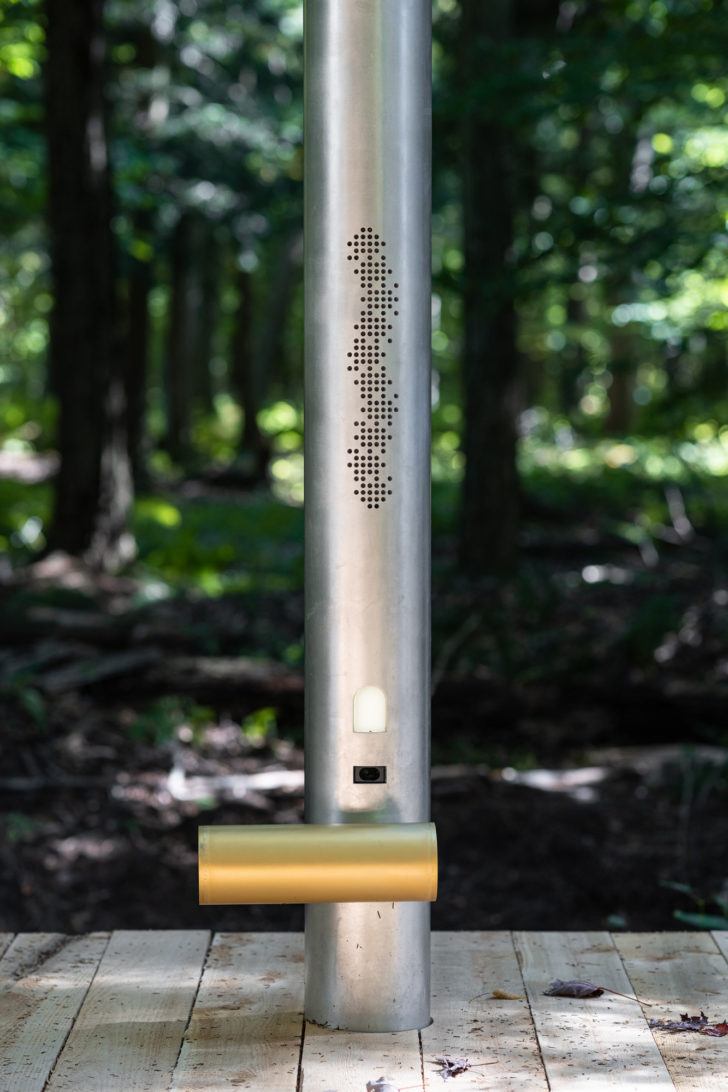
When humans sit or stand upon a perch, a local bird call is blended into the composition. Volume is kept low, directed at the ear of the user and audible only to those very close to the perch.
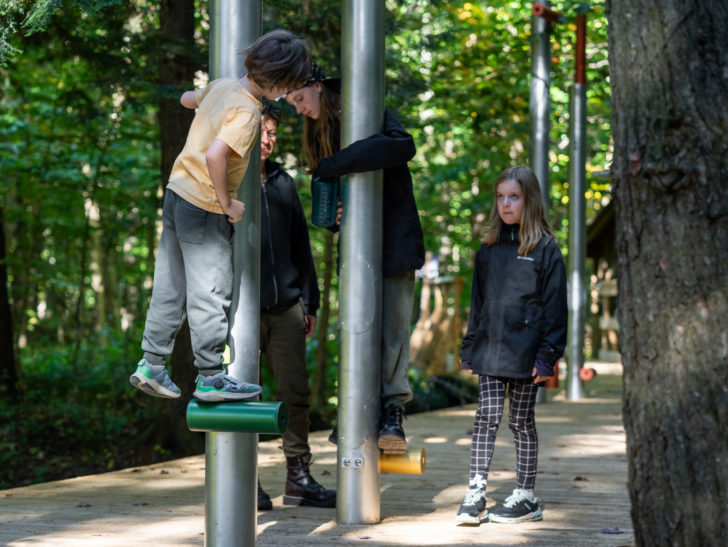
Human Perches was created for The Quebec Union for the Rehabilitation of Birds of Prey (UQROP) in St-Jude. The on-site biologists’ knowledge of fragile local species shaped the project from the outset. Early in the creative process, a bird chant detector was installed and regularly compared with observations from the sanctuary’s team to better understand the activity of local birdlife. Dozens of species were observed in the early morning, while very few remained once human activity resumed in the area.
We also understand that playing recorded calls to young birds can negatively impact their development. The birdsong in the artwork’s soundtrack can only be triggered by human presence, or possibly by animals walking on the boardwalk. Birds are more likely to use the non-interactive perches at the top of the artwork. The low-volume soundtrack is directed at the height of human participants’ ears, ensuring that the artwork is unobtrusive to non-human residents.
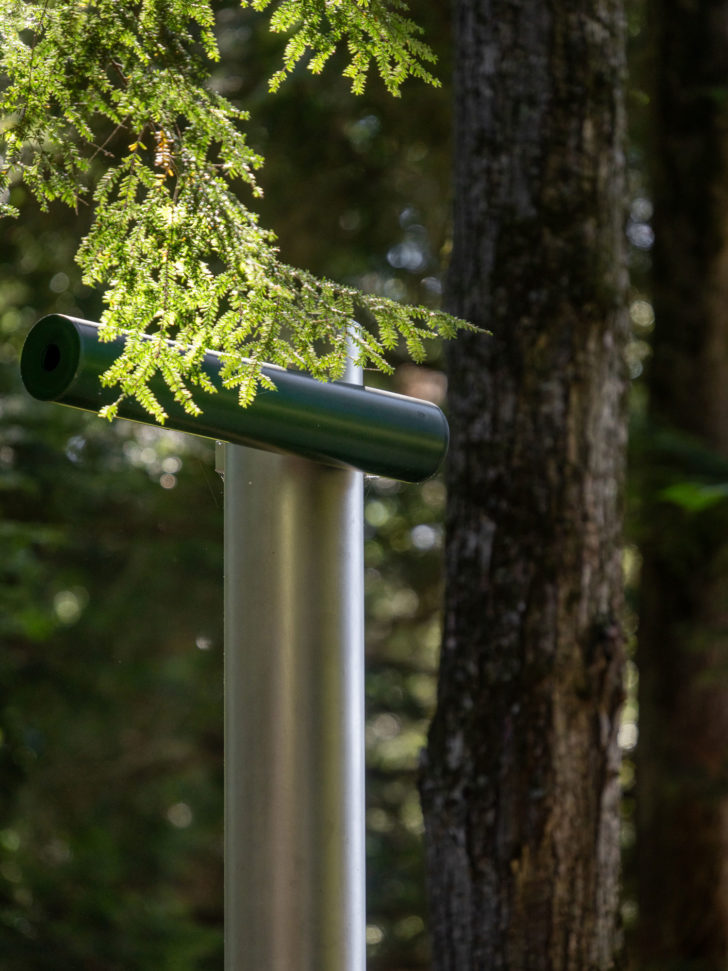
Juno award winning composer Keiko Devaux collaborated with Daily tous les jours on the development of an interactive soundtrack that encourages curiosity and stillness.
Keiko created an evolving dialogue between two sonic layers: a base composition, and trigger tracks featuring the voices of seasonal birds. These bird calls are also integrated into the base compositions, transformed into ethereal textures or rhythmic elements. The resulting soundscape offers rich details to those who perch and lean in to listen. The perches adopt the energy of their respective seasons, featuring bright pizzicatos for spring, languid pedal steel for summer, low strings for autumn, and airy flutes for winter.
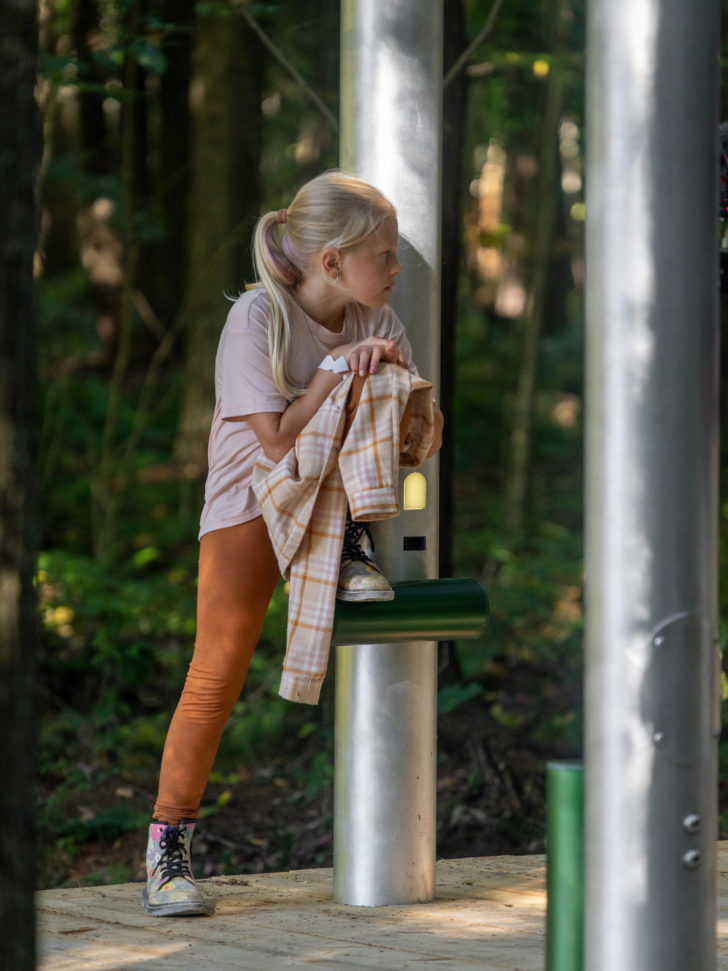
The formal and material simplicity of the structures allows them to blend more seamlessly into the backdrop of the forest, keeping the natural surroundings at the core of the experience.
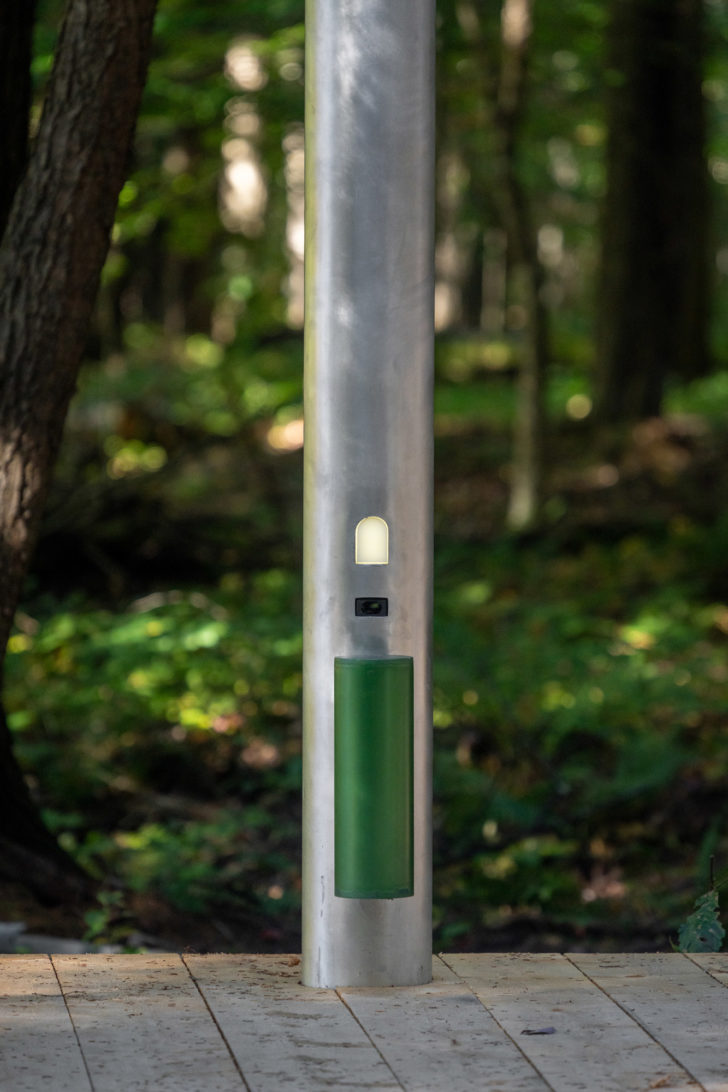
Aluminum tubes of varying lengths are assembled to allow for human perching at different heights. Color is used to highlight the perching components, and differentiate the four seasonal soundtracks. Placement of the speaker holes on the poles also varies in height, sometimes inviting visitors to crouch, to stand, or to stretch.
Perching components at the top of the poles invite avian friends to join the experience, a more likely occurrence when no humans are present.
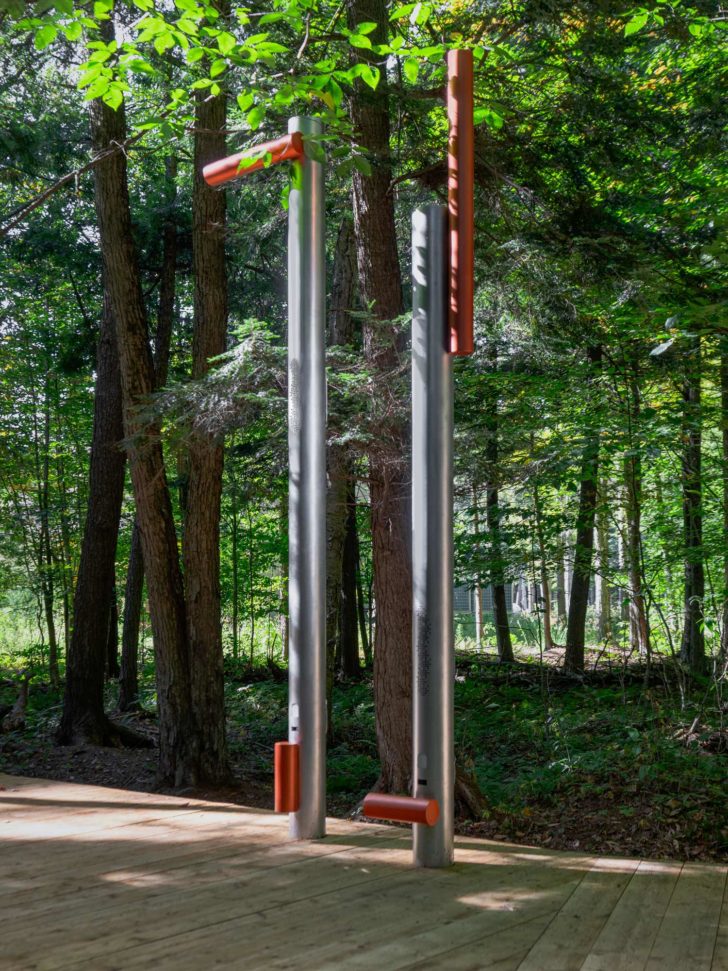
Aluminum was chosen for its durability and recyclability, ensuring an eventual second life for the artwork. Technology is integrated sparingly and thoughtfully, balancing interactive elements with environmental impact.
The steel structure supporting the wooden boardwalk is repurposed from maintenance walkways salvaged from the decommissioned Champlain Bridge. It rests on screw piles that elevate it from the ecologically dynamic forest floor, protecting the complex ecosystem that draws birds to the area and allowing humans to pass through with minimal disturbance.
The Quebec Union for the Rehabilitation of Birds of Prey (UQROP) in St-Jude receives over 400 birds each year, providing a vital space for their rehabilitation while raising awareness about the ecological challenges they face. As part of the construction of its interpretation center, and with support from Quebec’s Ministry of Culture and Communications, UQROP commissioned Daily tous les jours to create a new artwork for its forest.
Located near the entrance of the interpretation center, the artwork creates a transitional space between the natural and educational environments.