Walk of the Wind
Lac-Mégantic, CA
Hornby Island, British Columbia, CA
A sonic ritual with the forest
Hornby Island, British Columbia, Canada
Forest Mixer is a voice composting system that turns visitors’ spoken messages into harmonies that resonate through the surrounding forest, eventually decomposing into vibrations felt in both body and soil. Nestled in a forest of British Columbia, the artwork invites reflection on the cycles of growth and decay that sustain all living systems.
The work takes cues from recent studies on how trees and soil organisms respond to sound and vibration, stimulating growth and communication within ecosystems.
Blending play, sound ecology, and healing resonance, Forest Mixer offers joy, catharsis, and a tangible reminder of our connection with the natural environment.
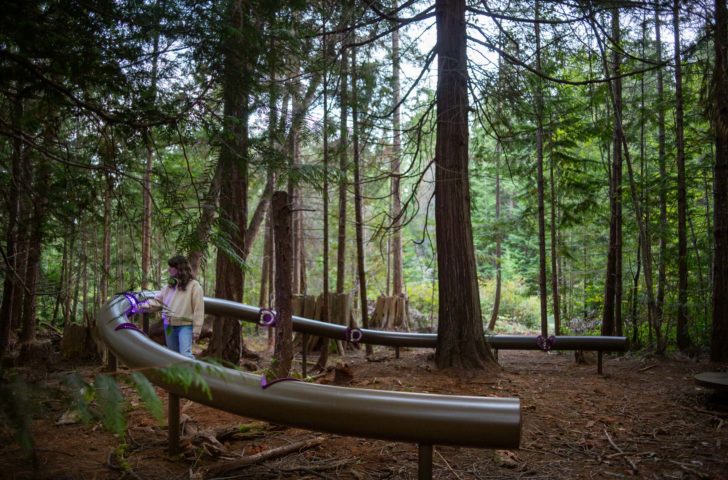
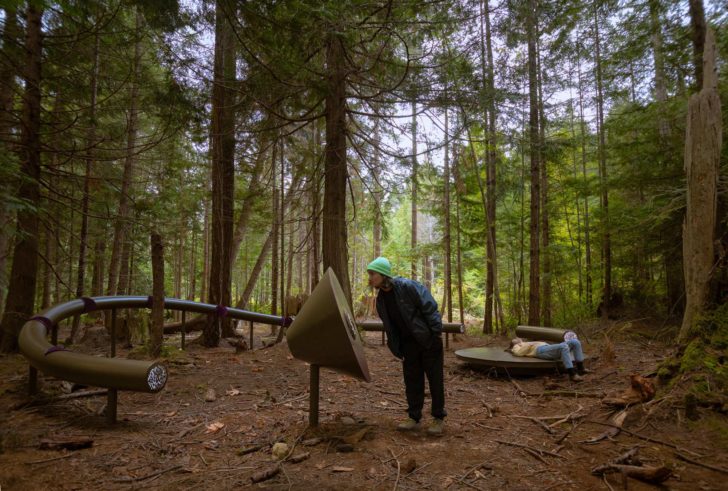
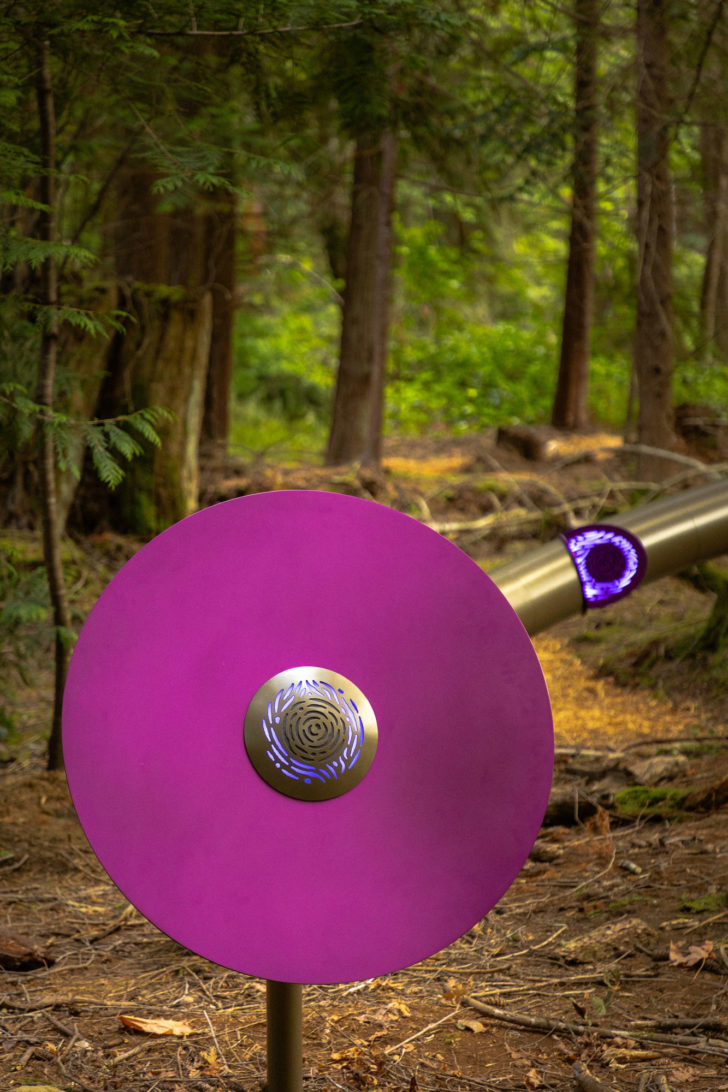
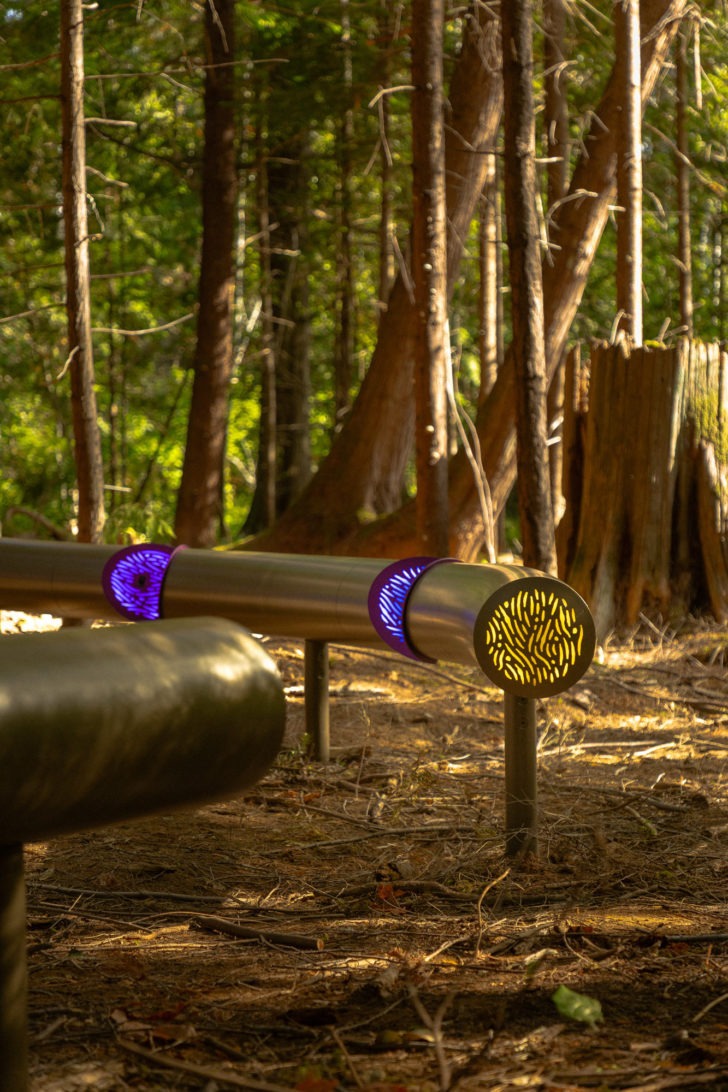
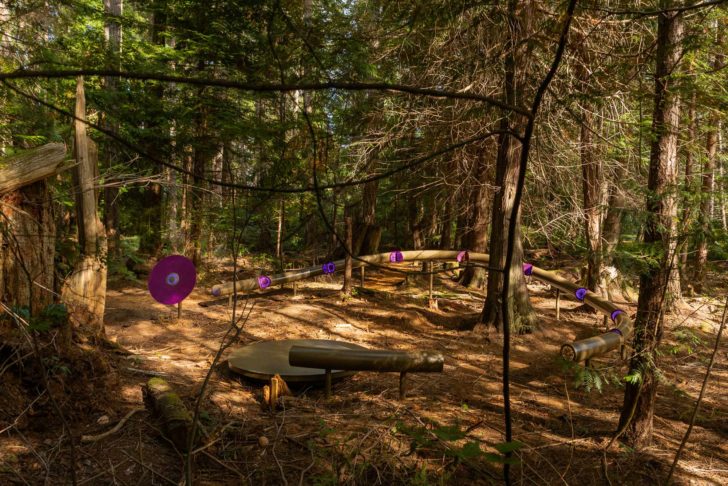
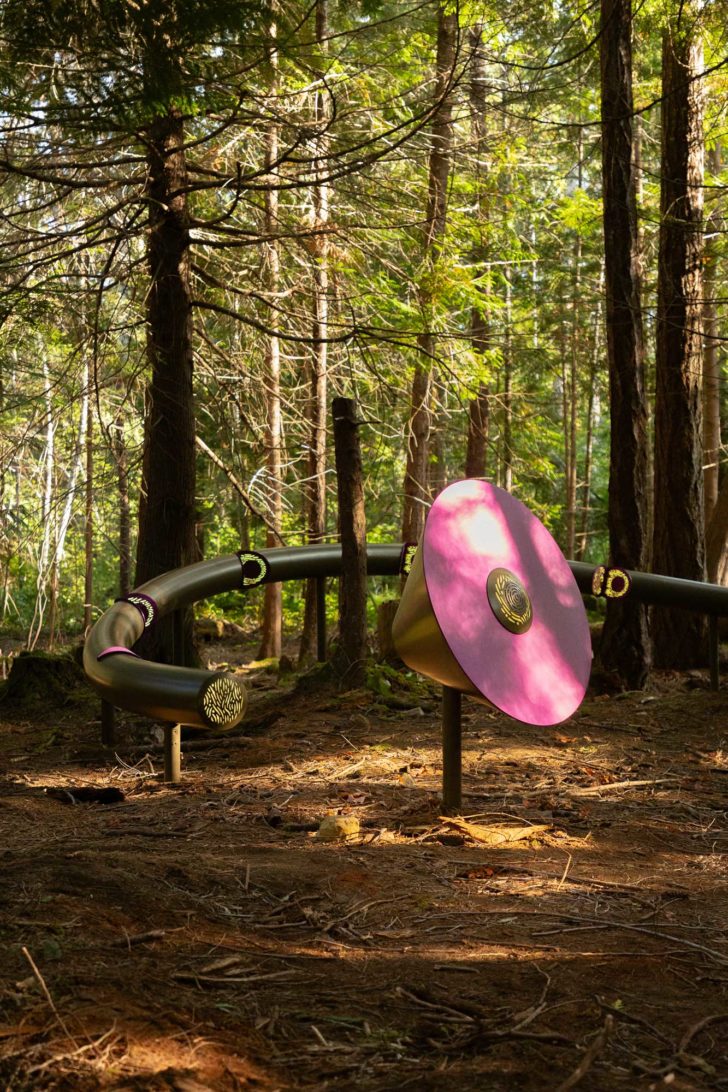
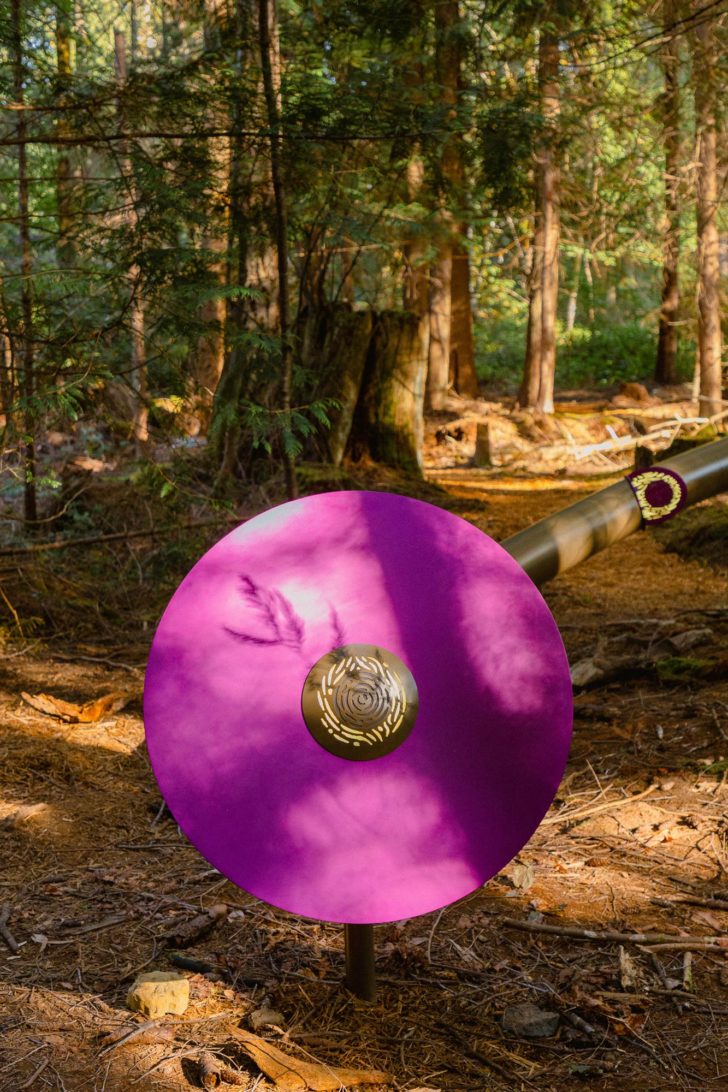
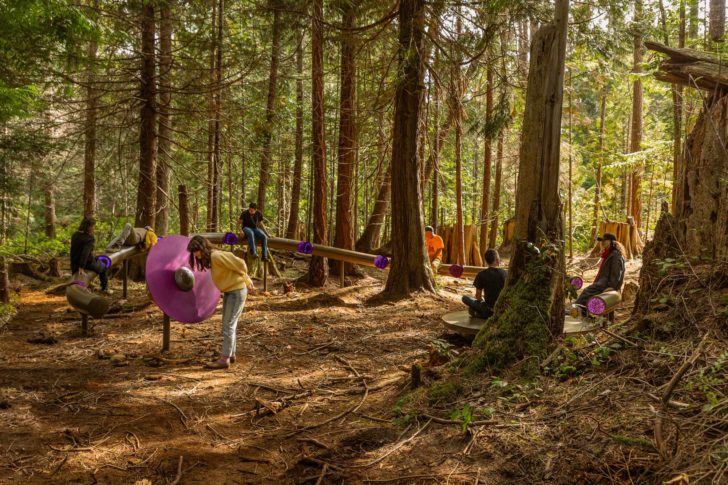
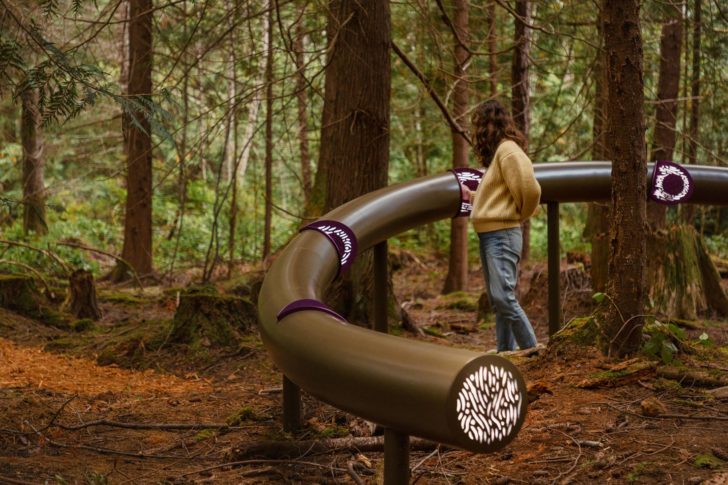
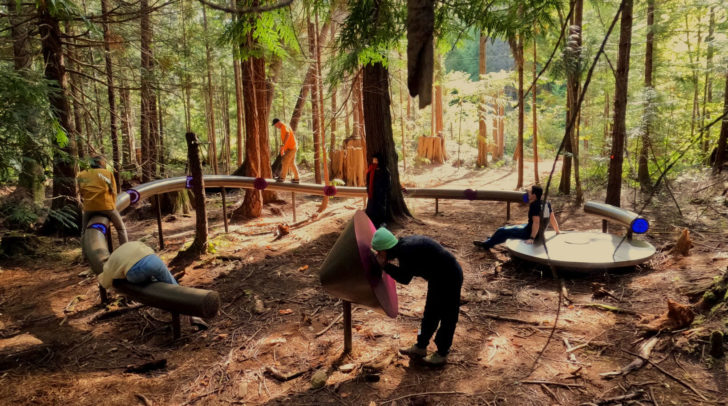
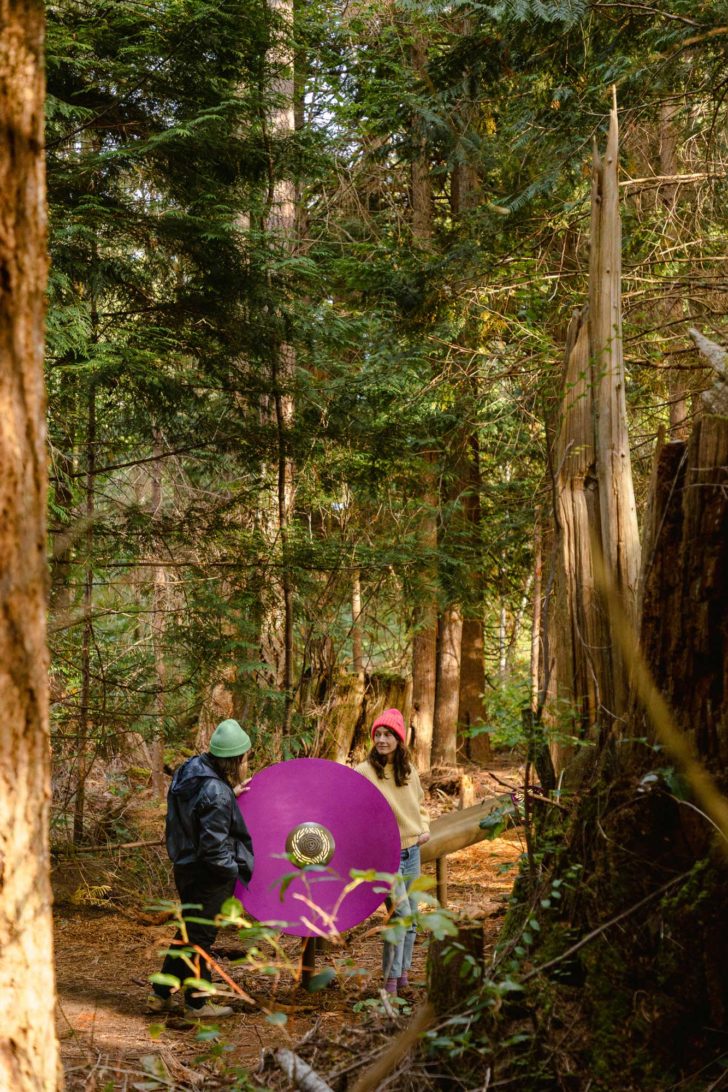
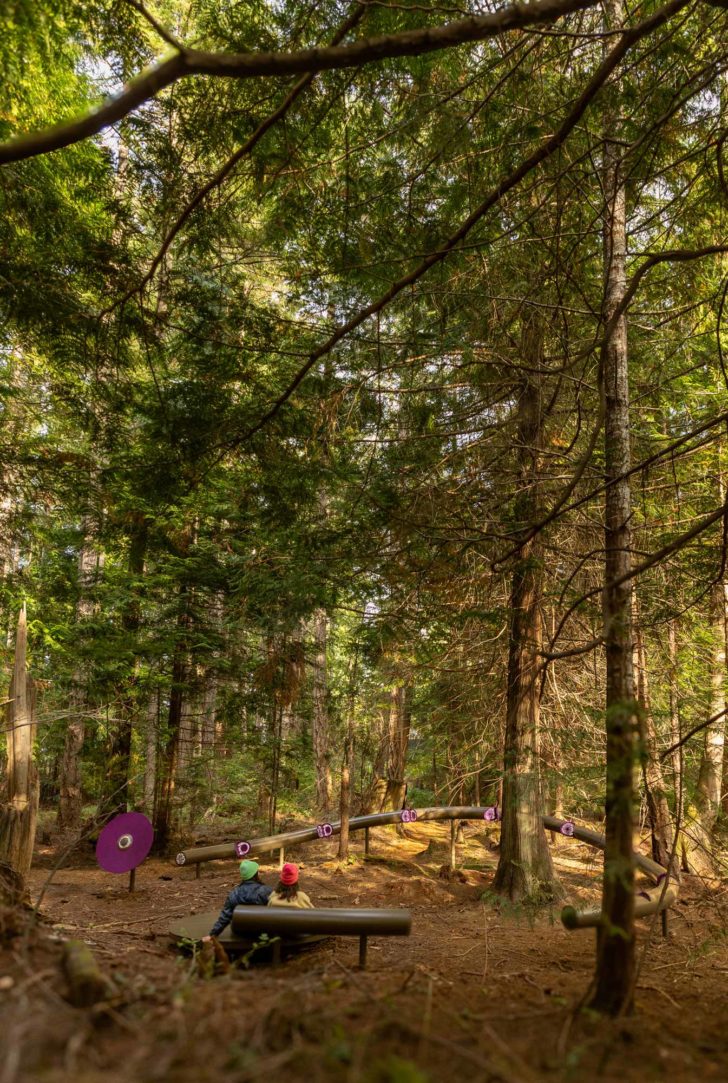
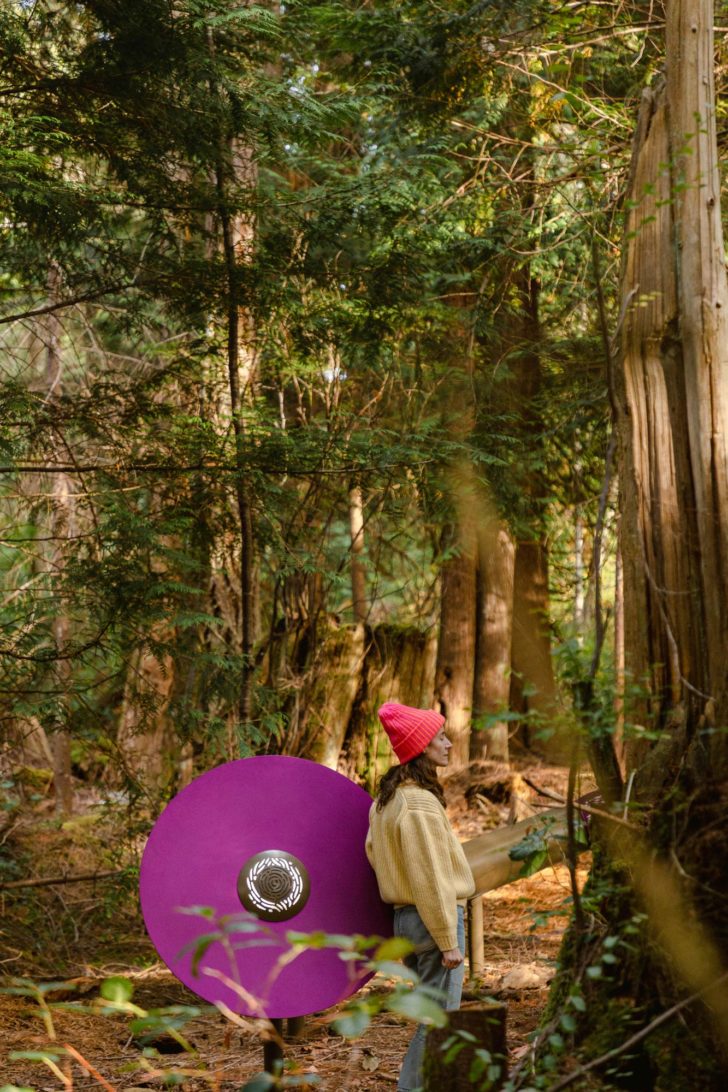
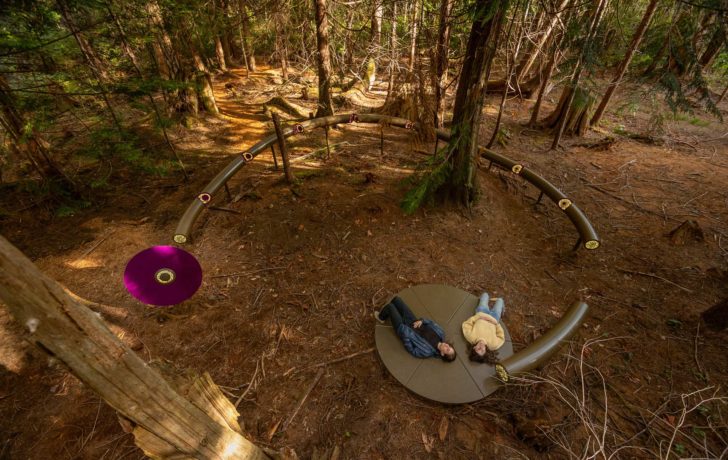
Visitors speak their message into an input station. Their voice travels the length of the tubular structure, first rising into harmonic melodies, then descending into disintegration and decomposition.
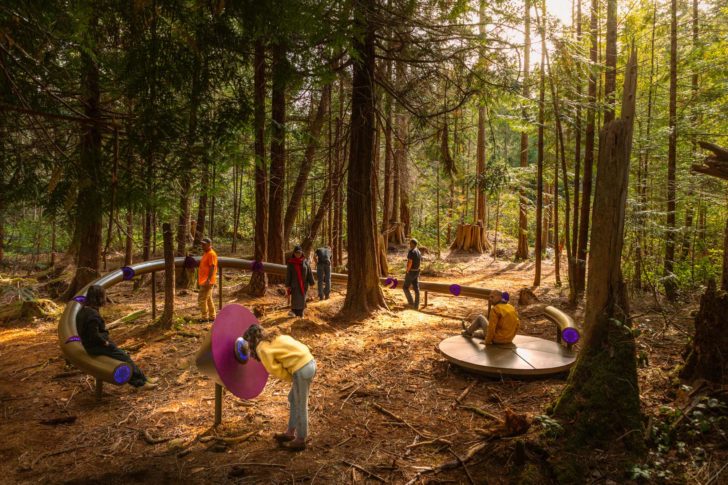
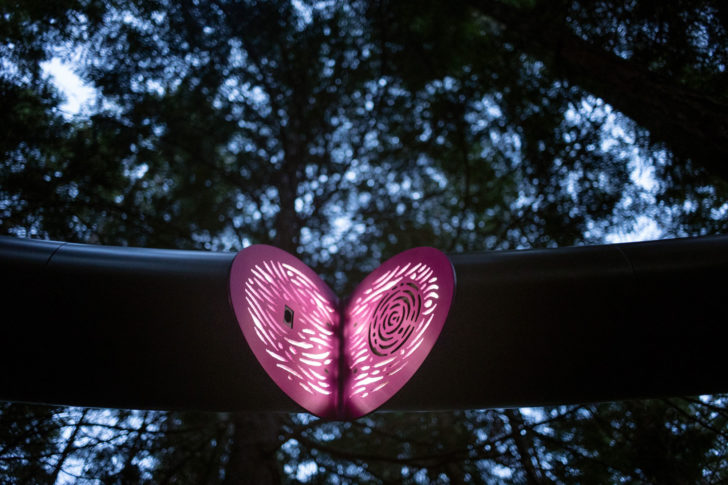
Eight interaction points along the structure allow visitors to reach out their hand and loop a message, further mixing and playing with the soundscape. At the end of the tube, messages descend into a vibration platform, where visitors can touch, sit, or lie on the surface to feel the music further disintegrating into the soil.
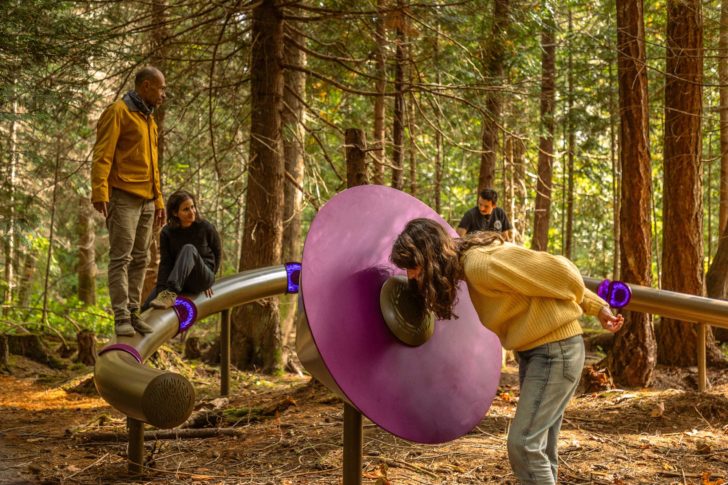
Forests, in their constant flux, remind us that what we experience today may not exist tomorrow, and that life thrives in chorus.
Through music, Forest Mixer offers a playful and poetic form of communication that connects people with the natural environment, while opening to a new form of listening, allowing voices, bodies, and ecosystems to resonate together.
From the site, the calls of tree frogs and sea lions blend with the forest’s own acoustic presence, creating a rich sonic habitat for the artwork.
Forest Mixer builds on research and experimentation around interspecies connection and collective experience in the age of rewilding, offering insight into how contemporary environments might be shaped through renewed relationships between lives that often remain largely foreign to one another.
The sensory diversity of the artwork, including sound, light, vibration, and movement, opens it up to a wide audience. The input station’s microphone is positioned low, allowing people of different heights, standing or seated, to contribute their voices comfortably. Multiple interaction points encourage various modes of engagement: standing, sitting, or lying down. The vibrations that carry the decaying voices can be felt through a platform that participants may experience with their whole body, or simply by touching it with their hands.
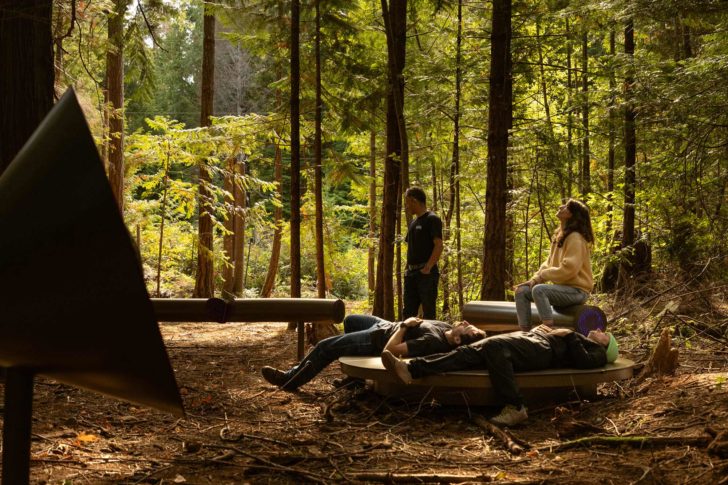
Forest Mixer was developed with careful consideration for the surrounding ecosystem. The project was informed by close collaboration with a landscape architect deeply knowledgeable about the site and the region, including seasonal changes and species at risk. The site itself had been undergoing rewilding for two years, providing valuable insight into what was possible and what was necessary to preserve the health of the forest. To minimize intervention, the structure is elevated on legs with small, targeted foundations, allowing water, plants, and wildlife to continue circulating beneath and around the artwork.
As we focus on working on an approach to technology that makes sense for the human experience in urban contexts, Forest Mixer was a chance to go back to our roots and see what we can bring back to the urban experience. Tech and nature are often opposed. Since technology is far from going away, we asked ourselves, can we imagine a world where they live together more harmoniously?